Managing rosacea takes more than skincare
If you have rosacea, you probably already know that managing it takes more than a good skincare routine. The persistent redness, the flushing that comes out of nowhere, the thread veins that won't budge — it can be genuinely frustrating, especially when information online swings between miracle-cure claims and doom. IPL for rosacea is one of the more well-established treatment options, and it's worth understanding clearly before you decide whether to explore it.
This article covers what rosacea actually is, how IPL works on it, what the process looks like in practice, and — importantly — when it's suitable and when it isn't.
What is rosacea, and why is it so hard to manage?
Rosacea is a chronic inflammatory skin condition that primarily affects the face, appearing as persistent redness across the cheeks, nose, and chin, and often involving visible blood vessels (thread veins) and flushing episodes. Triggers vary but commonly include heat, alcohol, stress, spicy food, and exercise.
It's more common than many people realise, and it can look very different from person to person. What most have in common is that it has no permanent cure — it's a condition you live with, and treatment is about managing how it looks and feels rather than switching it off entirely. That said, there are treatments that can make a meaningful difference to the visible symptoms, and rosacea laser treatment is one of them.
How does IPL work for rosacea?
IPL stands for Intense Pulsed Light. It uses broad-spectrum light energy delivered in pulses to target haemoglobin — the pigment that gives blood its red colour — in the visible vessels near the skin's surface. The light energy is absorbed by those vessels, causing them to gradually break down and be reabsorbed by the body, which reduces the appearance of redness and thread veins over a course of treatment.
It's worth being clear about what this means in practice. IPL doesn't address the underlying tendency for rosacea to flare — triggers will still trigger. What it can do is reduce the visible vessels that make redness more persistent between flares, and in some cases reduce the overall background redness as well. Many people find the results give them a more even baseline, which makes flares feel less noticeable when they do happen.
As a rosacea facial treatment, IPL is most effective on the vascular component — the redness and thread veins. It isn't typically used to address papulopustular rosacea (the kind involving spots or breakouts), and it won't change the texture associated with more advanced forms of the condition. Being honest about what a treatment is and isn't well-suited to is something we feel strongly about at Zazura.
What to expect from a course of treatment
Most people need a course of sessions rather than a single treatment — typically between three and five, spaced a few weeks apart. The number depends on the severity of the redness, how your skin responds, and what you're hoping to achieve.
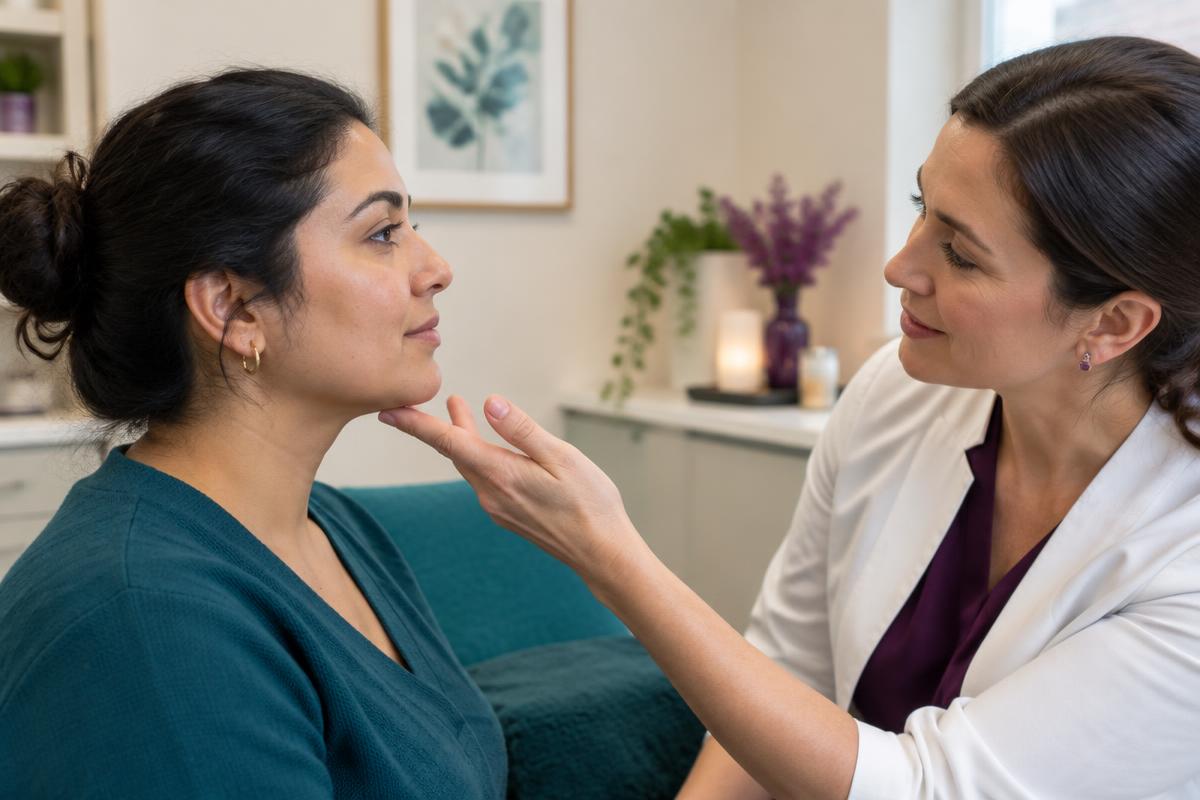
Before any treatment begins, a thorough consultation is essential. We'll look at your skin in detail, discuss your concerns and medical history, and assess whether IPL is the most appropriate option for you. A patch test is also carried out before the first session.
During treatment, most people describe a warm snapping sensation on the skin — it's not particularly comfortable, but it's generally well-tolerated. There's typically some temporary redness afterwards that settles within a few hours to a day or two.
Results develop gradually over the course of treatment. Some people notice a visible change after the first session; for others, it takes longer. This is completely normal and doesn't indicate the treatment isn't working.
Is IPL right for you? Suitability matters
IPL for rosacea isn't suitable for everyone, and this is where an honest conversation really matters. Some of the factors that affect suitability include:
- Skin tone. IPL works by targeting contrast between the blood vessels and the surrounding skin. On deeper skin tones, the treatment carries a higher risk of affecting the surrounding pigment, which is why it's less commonly recommended for Fitzpatrick skin types V and VI. This isn't a blanket rule, but it does need to be properly assessed.
- Active rosacea flares. Treating skin that's actively inflamed isn't ideal — it can increase sensitivity and the risk of adverse reactions. We'll usually advise waiting until a flare has settled before proceeding.
- Certain medications and health conditions. Some medications make the skin more photosensitive, and some health conditions affect whether IPL is appropriate. This is why the consultation goes through your medical history in detail.
- Pregnancy. IPL is not carried out during pregnancy.
Why suitability is assessed in person
There are other factors too — this isn't an exhaustive checklist. The honest answer is that suitability for rosacea IPL treatment needs to be assessed properly, in person, by a practitioner who can look at your skin, ask the right questions, and consider your individual circumstances. A list on a website is useful for general information, but it isn't a substitute for that.
Why the right practitioner matters
The difference between a good outcome and a poor one often comes down to who is carrying out the treatment and how thoroughly they've assessed you beforehand.
IPL uses significant energy, and when it's applied without a proper understanding of rosacea, skin tone, and individual suitability, there is genuine risk of side effects including burns, pigmentation changes, or simply not achieving meaningful results. This isn't meant to alarm — IPL has a strong safety record when it's delivered correctly — but it's why we'd encourage anyone considering this treatment to choose a practitioner who takes the assessment seriously, not one who moves straight to booking.
At Zazura, every treatment begins with a consultation. We'll look at your skin, listen to what you're hoping to achieve, and give you an honest view of whether IPL is the right route — or whether something else might serve you better. If it isn't suitable, we'll tell you.
Thinking about exploring IPL for rosacea?
If you've been managing rosacea for a while and want to understand whether IPL could help, we're happy to talk it through with you. A consultation at Zazura is a proper conversation — we'll give you the time you need, explain your options clearly, and be straightforward about what's realistic for your skin. There's no pressure to proceed with anything.
£20 consultation and patch test — deducted from your first treatment when proceeding.
Considering treatment?
IPL Photorejuvenation in Durham
Light-based treatment for pigmentation, sun damage, redness and overall skin tone, planned after assessment.
Not sure yet? See how our consultations work.